
Quick answer: Understand super resolution, frame generation and quality modes before choosing the option that fits your GPU and frame-rate target.
Modern PC games can render a lower internal resolution and reconstruct it into a higher-resolution output. NVIDIA DLSS, AMD FSR and Intel XeSS each offer versions of this idea. Their names matter less than the result on your hardware, in your game and at your chosen output resolution.
Separate super resolution from frame generation
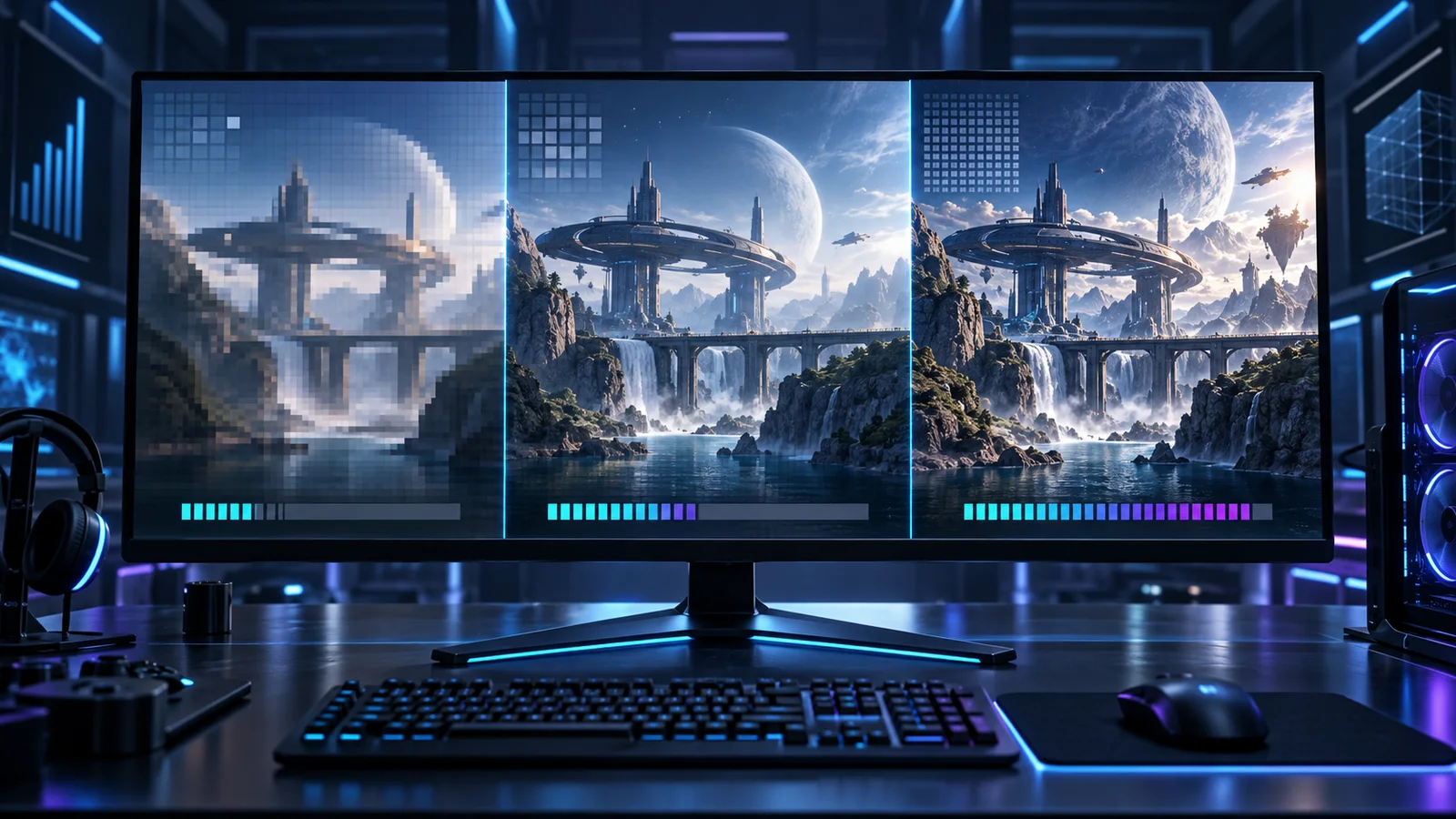
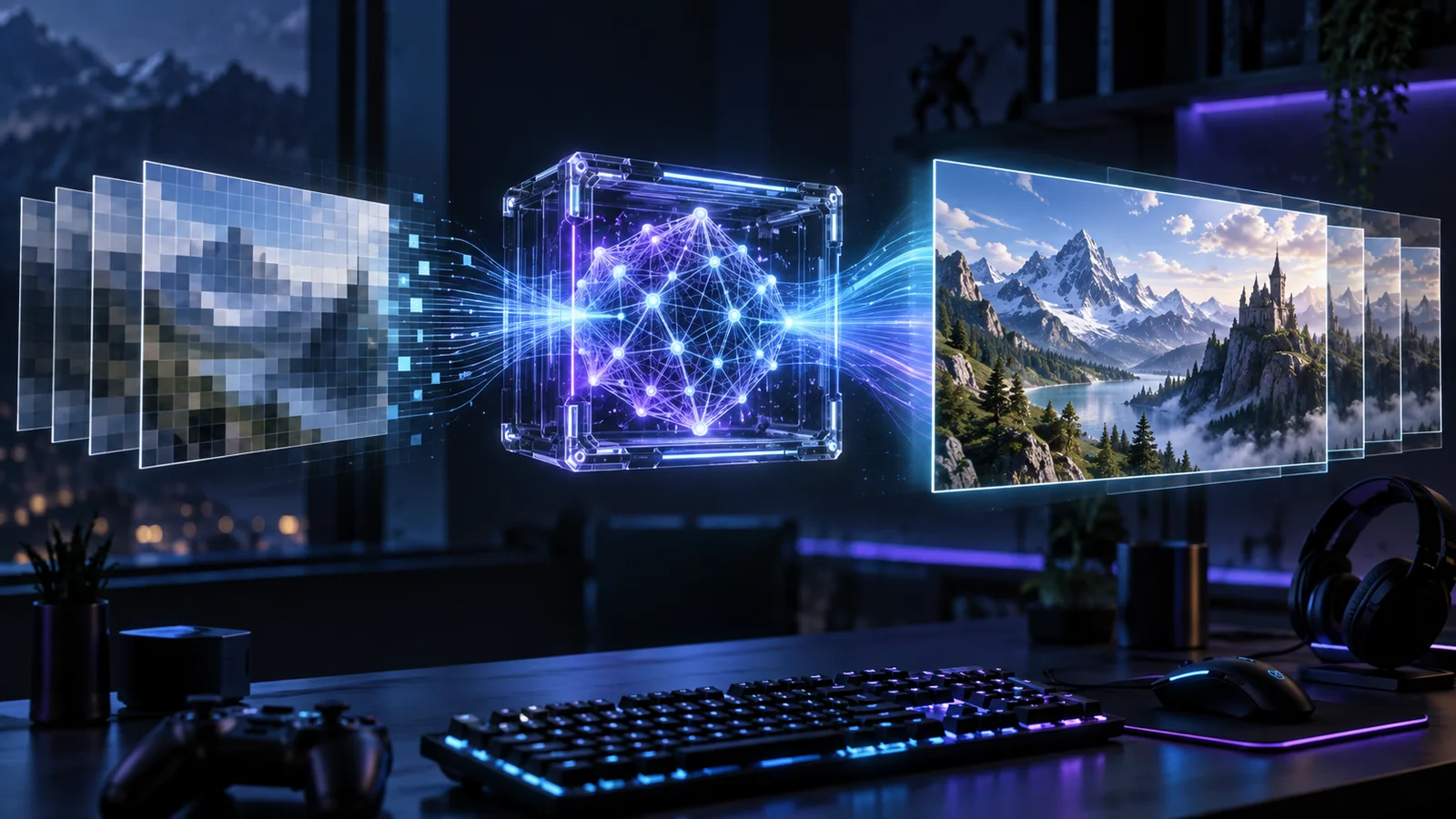
Super resolution creates a higher-resolution image from a lower-resolution render plus information supplied by the game. It can reduce GPU rendering work while aiming to preserve detail and temporal stability.
Frame generation is different. It inserts generated frames between conventionally rendered frames to increase displayed smoothness. It does not replace the need for a stable base frame rate, and a larger displayed FPS number does not automatically mean lower input latency.
Keep those features separate during testing. First choose a super-resolution mode that gives you a stable base. Add frame generation only after camera movement, controls and frame pacing already feel reliable.
Understand the three families
DLSS uses NVIDIA's reconstruction technology and its supported features depend on the GeForce RTX generation and the game integration. FSR is AMD's FidelityFX family and has appeared in several versions with different reconstruction and frame-generation capabilities. XeSS is Intel's family, with super resolution available across compatible hardware and newer frame-generation features tied to specific support requirements.
A game can include one, two or all three. The version shipped by the developer matters because image stability, ghosting and interface handling can improve or regress between integrations.
Start with quality mode
Preset names usually describe how low the internal rendering resolution goes relative to the output. Quality mode keeps more source information. Balanced and Performance modes trade additional image detail for more headroom.
At 1440p or 4K, Quality mode is the sensible first comparison. At 1080p, aggressive modes start from a much smaller internal image, so thin objects, hair, particles and distant detail can become less stable. Use Performance mode only when the extra GPU headroom solves a real problem.
Compare modes while moving. A paused screenshot can show sharpness, but it will not reveal trails behind characters, flickering foliage or unstable disocclusion around newly uncovered objects.
Check whether the limit is actually the GPU
Lowering internal resolution helps most when GPU rendering is the bottleneck. If performance barely changes between native resolution and a much lower mode, the CPU, engine, frame cap or another system limit may be controlling the result.
Use the resolution comparison in our 1080p, 1440p and 4K guide to establish a repeatable target. Then compare native rendering and Quality mode in the same demanding route.
Treat frame generation as a finishing step
Frame generation can make motion look smoother, especially when the conventionally rendered base is already healthy. It also needs good frame pacing and appropriate latency management. Fast competitive input and a weak base frame rate are poor situations for judging it by the displayed FPS counter alone.
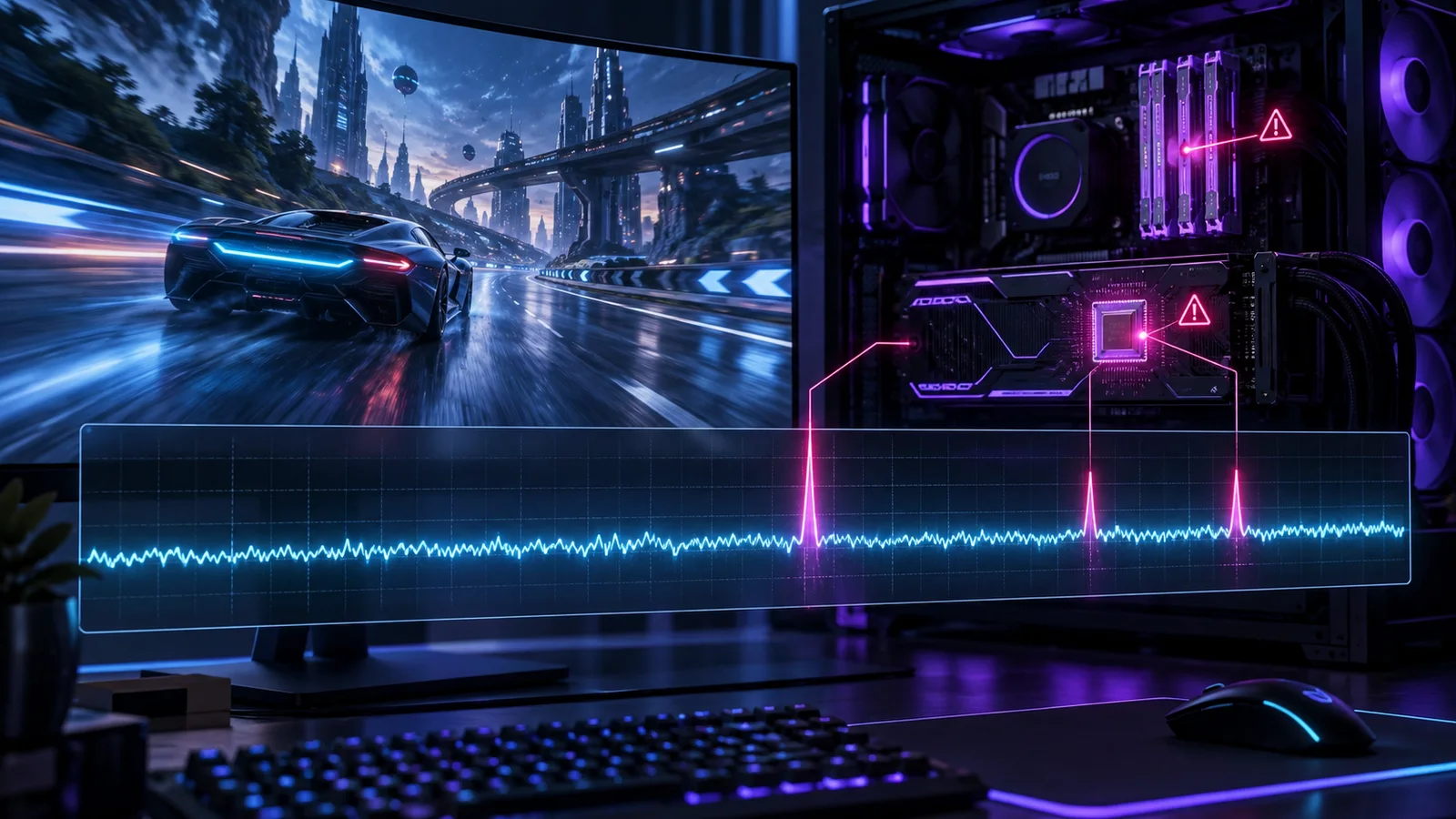
Check the game's compatibility notes, required rendering API and hardware support. Then compare input response, camera motion and interface elements with the feature on and off. If the result has periodic hitches, our frame-time and stutter guide can help separate reconstruction artifacts from broader system problems.
Save the mode that solves your problem
Choose native rendering when the PC already meets the target and image quality is stable. Use a quality-focused super-resolution mode when it releases useful GPU headroom with a small visual cost. Move toward Balanced or Performance only when the trade is visible and worthwhile on your display.
There is no universal winner across every game. The best option is the implementation that keeps motion clean, controls responsive and frame delivery consistent on the hardware in front of you.
Official references: NVIDIA DLSS developer overview, AMD FidelityFX Super Resolution, and Intel XeSS technologies.