
Quick answer: Choose a resolution by balancing screen size, GPU load, image clarity and the frame rate your PC can hold consistently.
Resolution changes how much detail a monitor can show and how much work the GPU must complete for every frame. The right choice is not automatically the highest number. It is the resolution that looks clear on your display while leaving enough performance for the frame rate and visual settings you value.
Start with the number of pixels
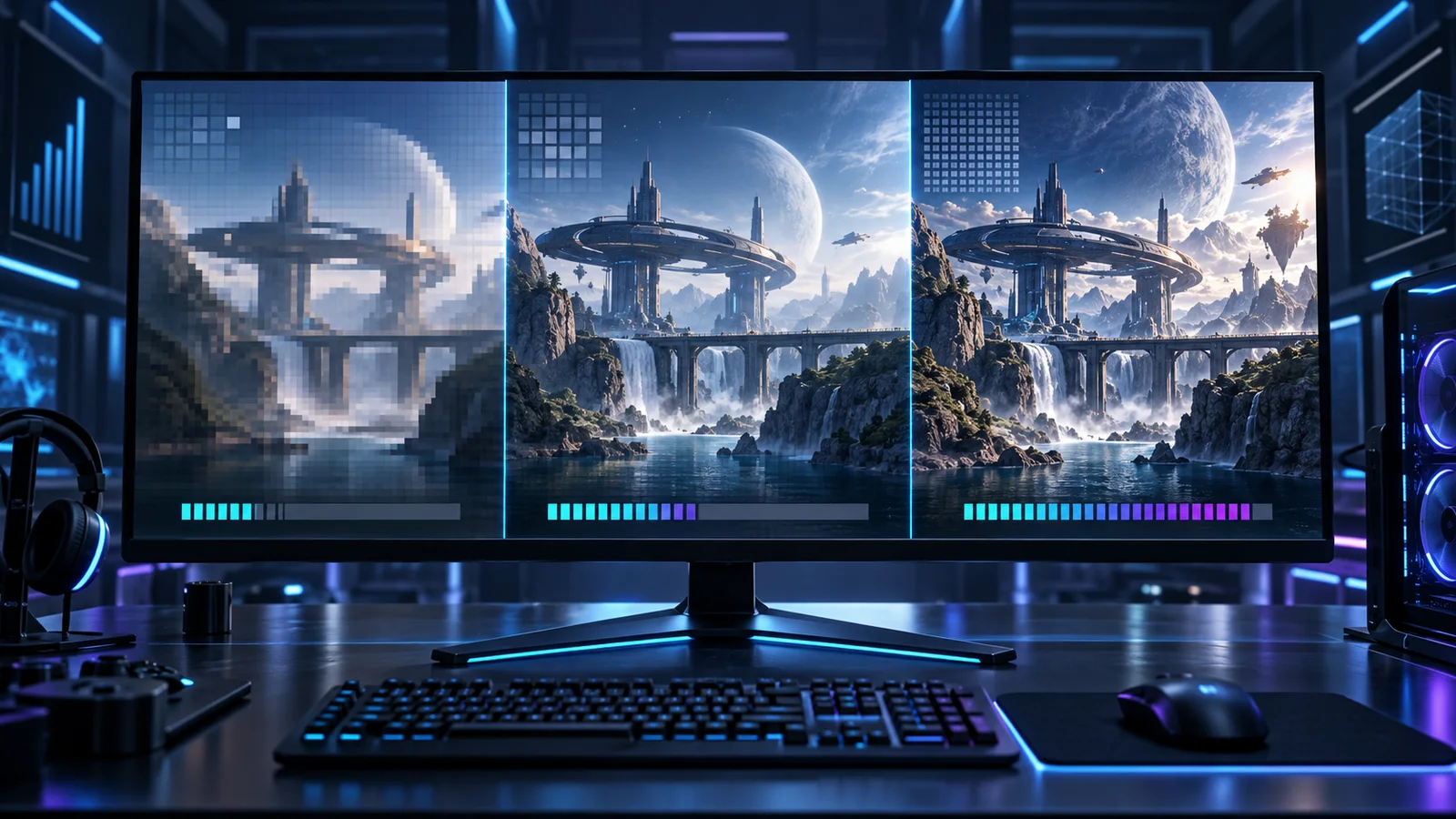
A 1920 by 1080 image contains about 2.1 million pixels. A 2560 by 1440 image contains about 3.7 million, while 3840 by 2160 reaches about 8.3 million. Moving from 1080p to 4K therefore asks the rendering pipeline to shade roughly four times as many pixels before other techniques are considered.
That difference does not translate into one universal FPS ratio. A game may be limited by the GPU, CPU, memory, engine or a frame-rate cap. Resolution usually matters most when the GPU is already the main limit.
Choose 1080p for speed and lighter hardware
1080p remains practical for smaller monitors, competitive play and systems that need more GPU headroom. It lets a modest graphics card spend less time on each frame, which can make a higher refresh-rate target easier to hold.
The tradeoff is visible on a large screen or at a short viewing distance. Fine geometry, foliage and distant objects can look less stable, especially when the anti-aliasing solution is weak. Before increasing resolution, make sure the game is using the monitor's native aspect ratio and a sharp anti-aliasing option.
Treat 1440p as the balanced target
1440p offers a clear step above 1080p without reaching the full workload of 4K. On a typical desktop monitor, it often gives interface text and game detail more room while leaving enough performance for high settings or a faster refresh rate.
It is still a meaningful GPU increase. Test a repeatable scene before deciding that the average FPS is acceptable. Camera turns, heavy effects and large outdoor views reveal drops that a quiet menu or empty room will hide.
Use 4K when clarity is worth the cost
4K suits larger displays, close viewing distances and games where image detail matters more than the highest possible frame rate. It can make thin geometry and distant scenery cleaner, but the GPU, graphics memory and upscaling implementation all become more important.
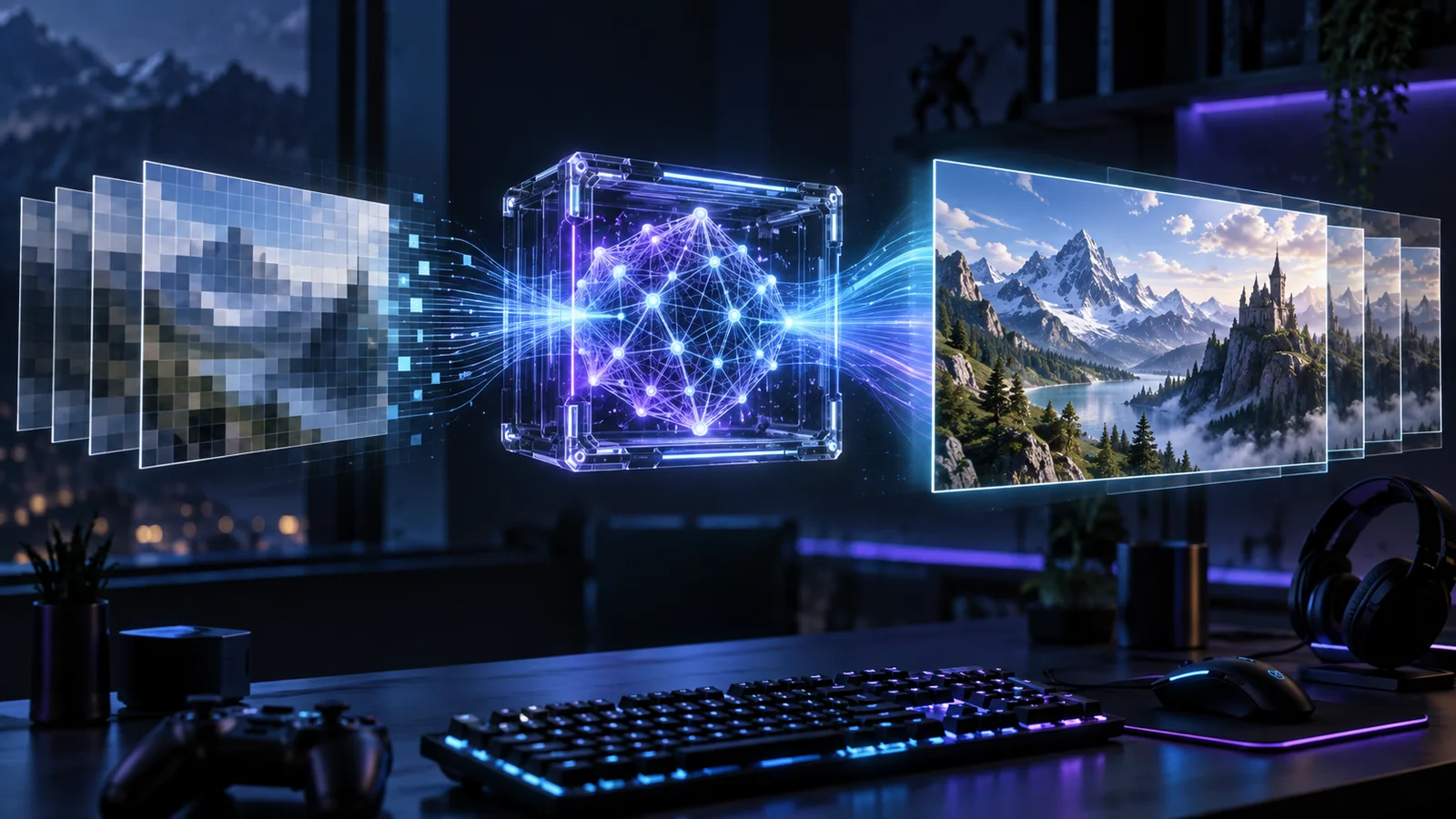
Do not reduce every setting just to keep native 4K. A quality-focused upscaling mode at a 4K output can preserve a sharp presentation while freeing enough GPU time for better lighting, effects or frame pacing. Our upscaling explainer shows how to compare those modes without relying on the preset name alone.
Test the real combination
Screen resolution is only one part of the load. Ray tracing, shadows, volumetrics, crowd density and reflection quality can cost more than expected. Change resolution first, record the result, then adjust one demanding setting at a time.
Use the same route or encounter for every pass. Watch average FPS, but also notice whether movement remains even. A stable lower number can feel better than a higher average interrupted by long frames. If those interruptions remain after lowering resolution, use our PC game stutter checklist to investigate the cause.
Match the display and the game
Use 1080p when responsiveness and broad hardware support come first. Choose 1440p when you want a strong balance of clarity and speed. Move to 4K when the display benefits from it and the PC can deliver the frame pacing you expect, either natively or with a good reconstruction mode.
The best resolution is a repeatable working target, not a badge. Save one profile for demanding games and another for lighter or competitive titles if that gives you a better session.
Official references: Microsoft guidance on display resolution and AMD FidelityFX Super Resolution quality modes.